Who let the docs out?
Thoughts on the policy paralysis surrounding electronic medical records in India
India, a country with great private healthcare (so much so that it is known for medical tourism), some great public healthcare (re: AIIMS et al) and mostly public last-mile health systems, many of which lies in shambles — these systems have one thing in common, the use of paper. In the year of 2026, India does not have a unifying electronic-health-record (eMR) system. Sure, the government has issued 'guidelines' for a eMR under ABHA, an eMR system in AIIMS (& some top public hospitals), and every for-profit chain has its own somewhat electronic systems of record-keeping; yet the use of paper remains the only widespread means of health record keeping. Medical charts, notes from patient rounds, prescriptions, tests results, everything that is on paper, and PDFs too, that gets printed no less, all of it goes on paper (in 2026 yes).
Good Morning!
India is also a big-user of WhatsApp, so big that there was news of WhatsApp/Google being worried that the internet is filling up with the 'Good Morning' messages and greetings sent out by Indian men and women everyday. Google had to build an AI tool (Files Go) just to detect and clear 'Good Morning' image forwards clogging people's phones. How big is WhatsApp? Beside the new CEO being Kunal Shah, and porting 500M premium users for 20% of Cred, even if they say differently, WhatsApp is the go-to-messenger in India and Telegram is a tool-used for other purposes.
WhatsApp is so ubiquitous it is used even in medical record-keeping in India. Photos of paper prescription, lab reports, PDFs, and even use of WhatsApp APIs sending out lab-test results from the AWS cloud are common for many health-systems and labs. Let me paint the picture of the photo of an x-ray as AIIMS Guwahati, Assam ran out of photo-negatives sent on WhatsApp to the attending doctors which should give you an idea of this picture, quite literally.
How-To-Bridge-This Kunal?
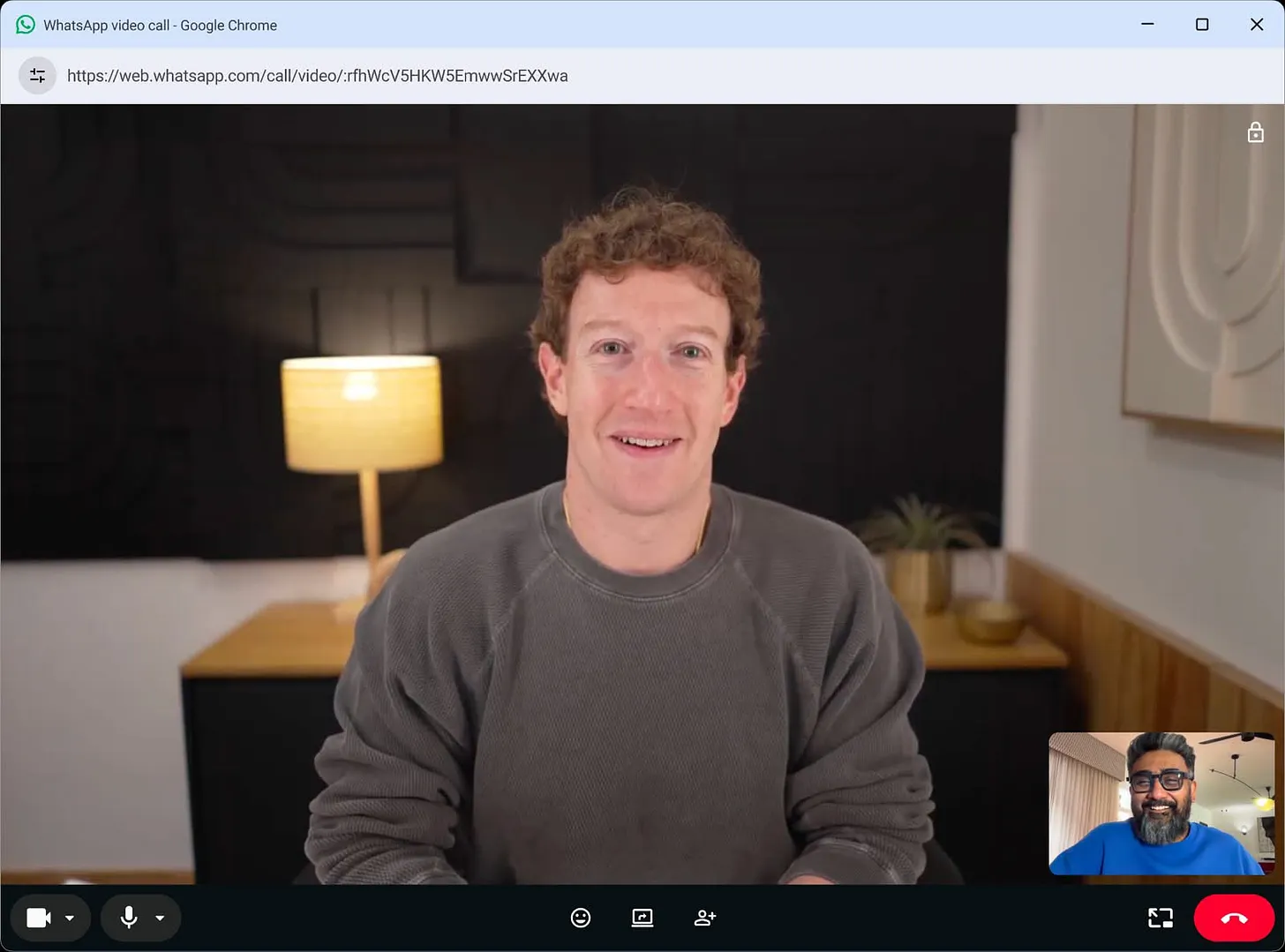
With E2E encryption, an emphasis on privacy, but also targeted advertising where brands use the WhatsApp API and send you unsolicited promo material after being blocked 5 times, it is not much of a farfetched idea that WhatsApp can be a good medium for eMR in the Indian context. Kunal, can you hear me?
WhatsApp API is facilitating this so much so that, BridgeHealth CEO Karan Varma, spoke to me about how they bridge their eMR gap by paying for AWS Cloud to host patient records securely and circulate them directly using automated WhatsApp messaging. Many other new-age healthcare firms in India follow the same model. Shout-out to Karan on hosting this curious b-school student though.
Who will bell this cat?
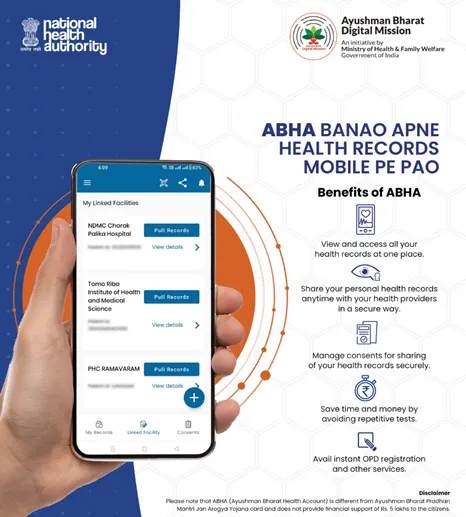
The tangent here being, who will pay for it and who will bell it? The government of India and MoHFW (the Health Ministry) has issued directives, guidelines for electronic-record keeping but hands it over to private players to deploy and connect their eMR systems to ABHA. The architecture of ABHA, its cloud storage capabilities or patient security (re: our own HIPAA) however remains much to be desired. Instances like the recent CBSE website school-leaving-exam results fiasco add fuel to this scarcity-of-confidence-fire. Who will bell this cat and who will pay for it—or simply put what is in it for me?
Solving this essential problem in India in scale is not something a bunch of McKinsey consultants can fix over a 6-8-week engagement. This is also not a problem many private healthcare firms want to be solved. It is unsaid that the primary fear would be a hit on their recurring set of customers. These customers might choose a competitor or at worst public health systems, if a customer (important: patients is double-speak, these are customer sets) their medical-records-and-history was available at the click of a button.
While this is true for the truly big players, the infrastructure to solve this for public systems is also non-existent as of today and solving this is going to be one logistical nightmare and maybe a decade long project.
Abundance versus Scarcity
India also functions on Jugaad. It's innovation yes, as my former director at IIM-I, Prof. Rishikesha T Krishnan of IIMB/Ashoka University would say but it is also something arising out of scarcity. Jugaad in India is a concept that addresses the regular failing of a socialist state on paper. Is it too many people, is it pandering to basest instincts, I do not know and do not want to say, as the personal-is-the-political but business-especially-is-also-political.
Jugaad can only partially bridge this healthcare gap but it can be a start of something concrete for sure. India already relies on WhatsApp, already has a 600M+ population connected to the internet primarily through smartphones. The ABHA app for the longest time did not exist on the Apple App Store because rightly so this was one app that did not need to be on an Apple device. Smartphones/tablets are and will be the primary data gathering tool in the upcoming and much delayed census of India, 2026.
Smartphones are used by health-workers, teachers and many other government employees to mark attendance, progress with GPS Camera being a popular tool. None of what I write here is new, all of this has been said, written, debated and scrutinized before. All I am doing is connecting the dots.

Who bells this cat or who brings the dogs back?
Nobody and I mean not even the government has been able to bell this cat with the directions it issues. It is also not that much of a priority that the Health Ministry forces everyone and anyone to use ABHA because ABHA is half-baked and put-out to play much like this capitalist-on-paper administration. But I think, It'll get belled the way most things do in India — Jugaad-first, by a tech-first large health firm (if its board allows the firm to see beyond immediate profit) or a pack of twenty others quietly building on WhatsApp because that's where the patients already are.
The government's job isn't to build the system. It's to stop getting in the way of the one that's already being built.
However, as egregious as the invisible hand is, it is also egregious to assume that profit-seeking healthcare firms will do this out of their own accord. That is, let go of perceived profitability or patient dollars by letting their customers travel to any other firm with one universal eMR system.
So the real-question still remains? Will India's benevolent not at all run by corporate dollars (read: electoral bonds) government force companies on ABHA or build-out the ABHA-like infrastructure? Or will a WhatsApp native, jugaad-built EMR system be good enough? Only time will tell but disparate systems will lead to frustrating systems and soon Blinkit/Instamart printing services won't be enough to keep up with our burgeoning health records as Indians move from one health-system to the other.
xoxo — Hrishi
Hrishi has worked for 3+ years in Tech Mahindra's Healthcare and Life Sciences vertical, servicing Payer-Provider clients in North America. He led the setup of an EPIC eMR services subsidiary and later served as Chief of Staff to the CTO of Tech Mahindra, leading the Go-To-Market of the Orion Agentic AI Platform. Currently based out of the Bay Area, he is moving to New Haven, CT to attend the Yale School of Management. Reach out on LinkedIn or Twitter.